
Eraser Tattoo PDF: A Comprehensive Guide to Laser Tattoo Removal
Laser tattoo removal utilizes focused light energy to shatter ink particles, allowing the body’s natural processes to clear them.
Detailed PDF guides offer insights into preparation, procedure expectations, and aftercare, ensuring informed decisions and optimal results.
What is an Eraser Tattoo and Why Laser Removal is Preferred
The term “eraser tattoo” isn’t a formal designation, but rather a colloquial way to describe the result of successful laser tattoo removal – a skin surface appearing as if the tattoo has been erased. While various methods historically attempted tattoo removal, often leaving scarring, laser technology has become the overwhelmingly preferred approach due to its effectiveness and minimized side effects.

Older techniques, like surgical excision or dermabrasion, were often invasive and carried significant risks. In contrast, laser removal selectively targets tattoo ink without broadly damaging surrounding skin. The laser’s energy breaks down ink into smaller particles, which the body then naturally eliminates.
PDF resources detailing laser removal emphasize this precision. They highlight how specific wavelengths target different ink colors, maximizing efficiency. This targeted approach minimizes scarring and provides a far more aesthetically pleasing outcome than previous methods, making laser removal the gold standard for those seeking tattoo removal.
Understanding Tattoo Ink and Skin Interaction

Tattoo ink isn’t simply deposited on the skin’s surface; it’s introduced into the dermis, the layer beneath the epidermis. This placement is crucial, as dermal cells are more stable, making tattoos relatively permanent. However, the body recognizes ink particles as foreign substances, initiating a mild immune response. Macrophages, immune cells, engulf some ink, while the rest remains encapsulated.

PDF guides on laser tattoo removal explain that the ink’s composition significantly impacts removal difficulty. Different inks utilize varying pigments and carrier solutions. Black and darker inks generally respond best to laser treatment due to their strong light absorption.
The interaction between laser light and ink is key. Ink particles absorb the laser’s energy, causing them to shatter. The body then gradually clears these fragmented particles. Understanding this process, detailed in comprehensive PDFs, is vital for managing expectations and optimizing treatment plans. The depth of ink placement also influences the number of sessions required.
The Science Behind Laser Tattoo Removal
Laser tattoo removal isn’t about “erasing” the tattoo, but rather selectively breaking down ink particles within the skin. This process relies on the principle of selective photothermolysis – meaning specific wavelengths of light target specific chromophores (color) without damaging surrounding tissue. Detailed PDF resources explain this complex interaction.
The laser emits pulses of concentrated light energy. These pulses are incredibly short in duration, measured in nanoseconds or picoseconds, minimizing heat diffusion to the skin. This targeted energy is absorbed by the tattoo ink, causing it to fragment into smaller particles.
These smaller ink particles are then recognized as foreign bodies by the immune system. Macrophages engulf and remove these fragments through the lymphatic system, gradually fading the tattoo’s appearance. PDF guides emphasize that multiple sessions are needed as the body can only clear a certain amount of ink at a time.
How Lasers Break Down Tattoo Ink
Laser tattoo removal hinges on the laser’s ability to deliver high-intensity light pulses, causing a photomechanical effect on the tattoo ink. These pulses create microsecond pressure waves within the ink particles, shattering them into minuscule fragments. Comprehensive PDF guides detail this process visually.
The ink isn’t vaporized, as often mistakenly believed; instead, it’s broken down into particles small enough for the body’s immune system to eliminate. The laser energy heats the ink, but the extremely short pulse duration minimizes thermal damage to the surrounding skin.
Once fragmented, these ink particles are transported to the lymph nodes for removal. The body’s natural clearance rate dictates the number of sessions required. PDF resources highlight that larger ink particles and denser tattoos necessitate more treatments. Understanding this breakdown is crucial for realistic expectations.
Wavelength Specificity and Ink Colors
Laser tattoo removal effectiveness is profoundly influenced by wavelength specificity, meaning different wavelengths target different ink colors. PDF guides emphasize that lasers aren’t “one-size-fits-all.” Black and dark blue inks readily absorb shorter wavelengths, like 1064nm, making them easier to remove.

However, colors like green, light blue, and yellow are more challenging, requiring different wavelengths (e.g., 532nm, 694nm) as they absorb light differently. Some inks, particularly those containing titanium dioxide, are notoriously resistant to laser removal. Detailed PDF resources illustrate which wavelengths correspond to specific ink pigments.
The laser’s wavelength must match the absorption spectrum of the ink for optimal fragmentation. Multiple laser types may be needed for multi-colored tattoos. Understanding this color-specific targeting, as explained in PDF documentation, is vital for assessing removal feasibility and predicting treatment outcomes.
Types of Lasers Used for Tattoo Removal
Laser tattoo removal isn’t a single process; various laser technologies exist, each with strengths and weaknesses. Comprehensive PDF guides detail these options, helping individuals understand their choices. Traditionally, Q-switched lasers were the gold standard, utilizing short pulses of high-intensity light to break down ink.
However, newer picosecond lasers are gaining prominence, delivering energy in even shorter bursts. This leads to more efficient ink fragmentation and potentially fewer treatment sessions. Other laser types, like fractional lasers, are sometimes used adjunctively, but aren’t primary removal tools.
PDF resources often compare these technologies, outlining their effectiveness on different ink colors and skin types. The choice of laser depends on factors like tattoo composition, patient skin tone, and desired treatment speed. Understanding these distinctions, as presented in detailed PDFs, is crucial for informed decision-making;
Q-Switched Lasers: The Gold Standard
Q-switched lasers have long been considered the benchmark in tattoo removal, and detailed PDF guides frequently emphasize their established efficacy. These lasers emit high-intensity pulses of light, albeit with longer durations than newer picosecond options. This energy is absorbed by tattoo ink particles, causing them to shatter into smaller fragments.
PDF resources explain that Q-switched lasers are effective across a broad spectrum of ink colors, though some, like blues and greens, require specific wavelengths. Multiple sessions are typically needed, as the body gradually eliminates the fragmented ink.
While newer technologies emerge, Q-switched lasers remain a reliable and cost-effective choice. PDFs often highlight the importance of a skilled operator to minimize side effects and maximize results. They are a proven technology, extensively documented in tattoo removal literature and readily available at many clinics.
Pico Lasers: A Newer, Faster Approach
Pico lasers represent a significant advancement in tattoo removal technology, often detailed in comprehensive PDF guides. Unlike Q-switched lasers, pico lasers deliver energy in incredibly short picosecond pulses – trillionths of a second. This ultra-short pulse length creates a photomechanical effect, shattering ink particles into even smaller fragments than Q-switched lasers.
PDF resources emphasize that this finer fragmentation leads to faster clearance and potentially fewer treatment sessions. Pico lasers are also reported to be more effective on stubborn ink colors, like blues and greens, which traditionally require more treatments with Q-switched lasers;
While generally more expensive than Q-switched lasers, the reduced number of sessions and improved results can make them a worthwhile investment. PDFs often include comparisons between the two technologies, helping individuals make informed decisions based on their specific tattoo and skin type.
The Tattoo Removal Procedure: A Step-by-Step Guide
A detailed PDF guide to tattoo removal typically outlines a standardized procedure. Initially, the area is cleansed, and the patient is provided protective eyewear. A handheld device then delivers laser energy pulses to the tattooed skin. During the session, you may experience sensations described as similar to a rubber band snapping against the skin – PDFs often detail pain management options.
Following each pulse, the skin may temporarily whiten. The technician systematically covers the entire tattoo, ensuring even treatment. Post-treatment, a cooling compress or ointment is applied. PDF resources stress the importance of following aftercare instructions meticulously.
These instructions usually include keeping the area clean, covered, and protected from the sun. Multiple sessions, spaced several weeks apart, are necessary to gradually break down the ink. PDFs provide realistic expectations regarding the healing process and potential side effects.
Preparation Before the Procedure
Comprehensive PDF guides on laser tattoo removal emphasize thorough preparation. Avoiding sun exposure and tanning beds for at least a month prior is crucial, as tanned skin can increase the risk of complications. A detailed PDF will advise discontinuing certain medications that may affect skin sensitivity or healing, like blood thinners.
The treatment area must be clean and free of lotions, creams, or makeup. Shaving the area is often recommended. PDF resources highlight the importance of informing your provider about any medical conditions, allergies, or previous skin treatments.
Hydrating well before the session can also optimize skin health. A PDF may suggest avoiding alcohol and caffeine beforehand. Understanding these preparatory steps, as detailed in a reliable PDF, significantly contributes to a safer and more effective tattoo removal experience.
During the Laser Session: What to Expect
PDF guides on laser tattoo removal prepare patients for the session experience. Expect a handheld device delivering pulses of laser energy to the tattooed skin. Many describe it as feeling like a rubber band snapping against the skin – a sensation that varies with individual pain tolerance and laser type. A cooling system is often used concurrently to minimize discomfort, as detailed in comprehensive PDFs.
The duration depends on the tattoo’s size and complexity, potentially ranging from a few minutes to over an hour. PDF resources emphasize the importance of remaining still during the laser pulses. You may notice immediate whitening of the treated skin, indicating the ink is breaking down.
Multiple sessions, spaced several weeks apart, are typically required for complete removal. Detailed PDFs outline this process and manage expectations regarding the gradual fading of the tattoo.
Post-Treatment Care and Healing Process
PDF guides on laser tattoo removal consistently stress diligent post-treatment care. Immediately after the session, the treated area will likely be red and may exhibit swelling, similar to a mild sunburn. Applying a cool compress can alleviate discomfort, as detailed in many informational PDFs.
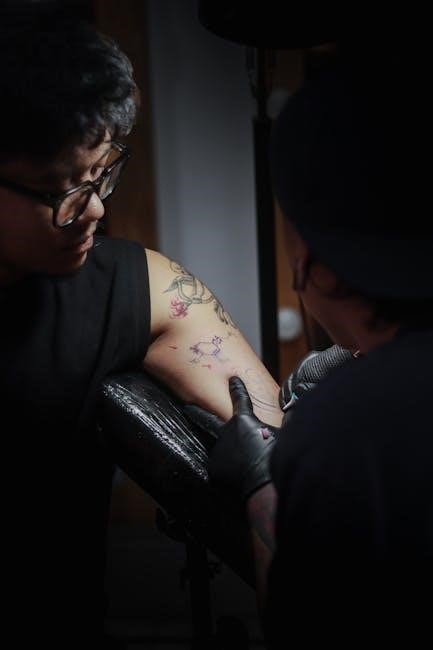
Blistering is a common occurrence and should be left undisturbed to promote healing; avoid picking or popping them. Keeping the area clean and applying a recommended ointment, often outlined in PDF aftercare instructions, is crucial to prevent infection.
Sun exposure must be strictly avoided during the healing process, necessitating sunscreen application and protective clothing. The skin will gradually return to normal over several weeks, and multiple sessions, guided by PDF timelines, are essential for complete ink clearance.
Potential Side Effects and Risks
PDF resources dedicated to laser tattoo removal thoroughly outline potential side effects. While generally safe, the procedure isn’t without risks. Common side effects include redness, swelling, blistering, and temporary changes in skin pigmentation – often detailed in downloadable PDF guides.
Less frequent, but possible, complications include infection, scarring, and textural changes to the skin. Hypopigmentation (lightening of skin) or hyperpigmentation (darkening of skin) can occur, particularly in individuals with darker skin tones, as highlighted in comprehensive PDFs;

Allergic reactions to ink fragments are rare but possible. It’s vital to discuss your medical history with your provider and carefully review the informed consent form, often available as a PDF, before undergoing treatment. Proper aftercare, as outlined in PDF instructions, minimizes these risks.
Factors Affecting Removal Success
Numerous factors influence the effectiveness of laser tattoo removal, often detailed within comprehensive PDF guides. Ink color is paramount; darker inks (black, dark blue) respond best, while lighter shades (greens, yellows) are more challenging, as explained in many PDF resources.
Tattoo depth and age also play a significant role. Older tattoos generally fade more readily than newer ones, and superficial inks are easier to target. Individual skin type and the body’s immune response are crucial; a robust immune system aids in ink particle elimination, a point emphasized in PDF documentation.
PDFs often highlight the importance of laser technology and provider expertise. Furthermore, location on the body impacts success, with tattoos closer to the heart typically responding better. Detailed PDFs provide realistic expectations based on these variables.

Ink Color, Depth, and Age
PDF guides on laser tattoo removal consistently emphasize the critical role of ink characteristics. Darker pigments, like black and dark blue, readily absorb laser energy, leading to quicker fading, as detailed in numerous PDF resources. Conversely, lighter colors – greens, yellows, and pastels – prove more resistant, often requiring specialized lasers and multiple sessions.
Ink depth significantly impacts removal difficulty. Superficial tattoos are easier to treat than those deeply embedded in the dermis. A tattoo’s age is also a factor; older tattoos often have partially broken-down ink particles, making them more responsive to laser treatment, a point frequently covered in PDFs.
PDFs often illustrate how professional tattoos, using high-quality inks, may respond differently than amateur tattoos. Understanding these nuances, as outlined in comprehensive PDFs, is vital for realistic expectations.
Skin Type and Immune Response
PDF guides dedicated to laser tattoo removal consistently highlight the importance of skin type. The Fitzpatrick scale, often detailed within these PDFs, categorizes skin based on its reaction to sunlight. Individuals with lighter skin tones (types I-III) generally respond more predictably and with a lower risk of pigmentation changes.

Darker skin tones (types IV-VI) possess more melanin, increasing the risk of post-inflammatory hyperpigmentation. PDFs emphasize the need for experienced practitioners and potentially different laser settings for these skin types. Your immune system’s efficiency also plays a crucial role; a robust immune response effectively clears fragmented ink particles.
Comprehensive PDF resources explain how factors like age, health, and medications can influence immune function, impacting removal success. Understanding these individual variations, as presented in detailed PDFs, is key to achieving optimal outcomes.
Cost of Laser Tattoo Removal and PDF Resources
PDF guides on laser tattoo removal frequently address the financial aspect, noting that cost varies significantly. Factors influencing price include tattoo size, colors, ink density, and the number of sessions required. Expect to pay per session, with costs ranging from a few hundred to over a thousand dollars, depending on these variables.
Many clinics offer free consultations, detailed in some PDFs, to provide personalized quotes. These PDF resources also caution against solely focusing on the lowest price, emphasizing the importance of practitioner experience and laser technology.
Numerous online PDFs offer comparative cost analyses and tips for finding reputable providers. These resources often include checklists for assessing clinic credentials and understanding potential hidden fees. Accessing these informative PDF guides empowers patients to make informed decisions and budget effectively for their tattoo removal journey.
Finding Reputable Providers and Assessing Costs
PDF resources dedicated to laser tattoo removal consistently highlight the critical importance of selecting a qualified and experienced provider. Look for clinics with board-certified dermatologists or physicians with specialized training in laser procedures. Thoroughly investigate practitioner credentials and read patient reviews, often summarized in comprehensive PDF guides.

When assessing costs, detailed in many downloadable PDFs, remember that initial consultations are frequently free. These allow for a personalized evaluation of your tattoo and a tailored treatment plan. Be wary of significantly discounted rates, as they may indicate less experienced practitioners or outdated technology.
PDF checklists can aid in evaluating clinics, covering aspects like laser type, safety protocols, and aftercare support. Prioritize clinics that prioritize patient safety and offer realistic expectations, as outlined in reliable PDF information.
Accessing Informative PDF Guides on Laser Tattoo Removal
Numerous online resources offer comprehensive PDF guides detailing laser tattoo removal. These PDFs often provide in-depth explanations of the procedure, from the science behind it to detailed aftercare instructions. Searching for terms like “laser tattoo removal guide PDF” yields a wealth of information from clinics, manufacturers, and medical organizations.
PDF documents frequently cover pre-treatment preparation, including avoiding sun exposure and certain medications. They also outline potential side effects and how to manage them effectively. Many PDFs include visual aids, such as before-and-after photos, to illustrate expected results.
Reputable clinics often host downloadable PDFs on their websites, offering insights into their specific techniques and technologies. Always prioritize PDFs from trusted sources to ensure accuracy and reliability, aiding in informed decision-making regarding tattoo erasure.