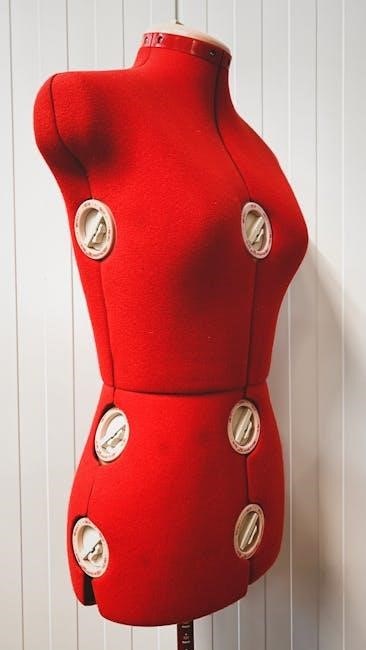
ulla johnson size guide

Ulla Johnson Size Guide: A Comprehensive Overview (Updated 02/03/2026)

Ulla Johnson generally runs large, with many customers finding success sizing down, particularly in dresses. This guide provides detailed insights to navigate their sizing effectively.

Understanding the Ulla Johnson Fit

Ulla Johnson’s aesthetic centers around bohemian femininity, often featuring flowing silhouettes, intricate detailing, and luxurious fabrics. This design philosophy inherently influences the brand’s fit. Garments are typically designed with ease and comfort in mind, resulting in a relaxed, rather than a body-con, fit. However, this ease can sometimes translate to running larger than standard sizing.

The brand prioritizes a flattering drape and movement, which is achieved through generous cuts. Expect to find pieces with wider sleeves, relaxed waistlines, and ample room in the bust and hips. It’s crucial to understand that consistency can vary between styles; some pieces may adhere more closely to standard sizing than others. Therefore, consulting specific garment measurements and customer reviews is highly recommended. The brand’s use of fabrics like cotton, linen, and silk also impacts how garments fall and fit on the body.

General Sizing Tendencies: Runs Large

Across numerous customer reports, a consistent theme emerges: Ulla Johnson clothing generally runs large. Many shoppers, even those who typically wear a specific size, find they need to size down – often by a full size – to achieve a desired fit. This is particularly noticeable in dresses and tops. A size zero is frequently purchased by customers who usually wear a size two or four in other brands.

However, this isn’t a universal rule. Some styles, particularly those with more structured silhouettes or limited stretch, may run closer to true-to-size. It’s essential to consider the fabric composition; garments with substantial stretch may be more forgiving. When in doubt, prioritizing sizing down is generally advisable, especially when purchasing online where trying on isn’t possible. Careful review of individual product measurements is always recommended.

Ulla Johnson Size Chart ─ Women’s Clothing

While a standardized, universally published Ulla Johnson size chart is not readily available, understanding their general measurements is crucial. Bust measurements typically range from 34″ to 44″, waist from 26″ to 36″, and hips from 36″ to 46″ across their size spectrum. However, these are approximate and vary significantly by style.

It’s important to note that Ulla Johnson often utilizes a more relaxed fit, influencing these measurements. Sizes generally correlate as follows: US 2 = Bust 34″, Waist 26″; US 4 = Bust 35″, Waist 27″; US 6 = Bust 36″, Waist 28″; US 8 = Bust 38″, Waist 30″; US 10 = Bust 40″, Waist 32″; US 12 = Bust 42″, Waist 34″. Always prioritize checking individual garment descriptions for specific size details and measurements before purchasing.

Comparing Ulla Johnson Sizing to Other Brands

When comparing Ulla Johnson’s sizing to more conventional brands, it’s generally accepted that their sizing runs approximately one size larger. Customers often find they wear a smaller size in Ulla Johnson compared to brands like Reformation or Madewell, which tend to have a more standard fit.

Compared to brands like Free People, known for their bohemian and often oversized styles, Ulla Johnson’s fit is more tailored, though still relaxed. If you typically wear a size 6 in J.Crew, you might find a size 4 or even a size 2 fits best in Ulla Johnson. Considering this difference is vital, especially when purchasing online. Always consult reviews and garment-specific measurements for the most accurate fit prediction.

Specific Garment Sizing Considerations

Ulla Johnson’s sizing isn’t uniform across all garment types. Dresses, particularly those with intricate detailing or flowing silhouettes, tend to run larger than tops or skirts. Knitwear often has more give, potentially allowing for a more forgiving fit, but still leans towards a generous cut.

Items featuring structured fabrics, like cotton poplin, may require more attention to precise measurements. Pay close attention to the bust and waist measurements provided for each piece. Consider the garment’s design; a wrap dress will offer more adjustability than a fitted bodice. Always review the product description for specific fit notes, as Ulla Johnson frequently includes details about a garment’s intended silhouette.

Dresses: Common Fit Issues & Solutions

A frequent concern with Ulla Johnson dresses is the generous sizing, leading to issues with the bodice or overall silhouette feeling too loose. Customers often report needing to size down, even in dresses where they typically wear their standard size. Another common issue is the length, as styles vary considerably.

If a dress feels too large in the bust, consider sizing down or exploring alterations to cinch the waist. For dresses that are too long, hemming is a straightforward solution. If unsure, compare your measurements to the size chart and read customer reviews for specific feedback on the dress’s fit. Prioritize understanding the fabric’s drape and stretch to anticipate how it will conform to your body.

Tops & Blouses: Shoulder & Bust Measurements

When selecting Ulla Johnson tops and blouses, accurate shoulder and bust measurements are crucial, given the brand’s tendency to run large. Pay close attention to the bust measurement, as many designs feature detailed embellishments or flowing silhouettes that require a precise fit. A well-fitted shoulder ensures the garment hangs correctly and avoids slippage.

Compare your bust measurement to the size chart, noting whether the garment offers any stretch. If you’re between sizes, consider sizing down, especially if the blouse has a relaxed fit. Shoulder measurements are particularly important for structured styles. Review customer feedback regarding specific blouse styles to understand potential fit variations and common sizing recommendations.

Bottoms (Pants & Skirts): Waist & Hip Measurements

Accurate waist and hip measurements are paramount when purchasing Ulla Johnson pants and skirts, considering the brand’s overall sizing tendencies. Prioritize a comfortable yet flattering fit, as many bottoms feature unique detailing or high-waisted designs. Measure your natural waist – the narrowest part of your torso – and the fullest part of your hips.

Compare these measurements to the official size chart, paying attention to the fabric composition. Styles with limited stretch may require a slightly larger size for ease of movement. High-waisted skirts and pants often benefit from a precise waist measurement. Customer reviews can offer valuable insights into how specific styles fit in practice, particularly regarding length and rise.


Ulla Johnson Plus & Extended Sizes

Ulla Johnson is progressively expanding its size range to offer more inclusive options, recognizing the demand for extended sizing. Currently, the brand features a selection of plus-size items, with availability varying by style and season. As of today, 02/03/2026, there are 18 items available in plus & extended sizes.

While not all designs are offered in every size, Ulla Johnson consistently increases the number of styles available in larger sizes. Regularly checking the official website or authorized retailers is recommended to discover the latest additions. Focus on detailed product descriptions and size charts, as fit can differ between styles. Explore resale platforms like Poshmark for potentially wider size selections from previous collections.

Availability of Sizes 18 and Beyond

Finding Ulla Johnson clothing in sizes 18 and above can require diligent searching, as availability fluctuates considerably. As of today, 02/03/2026, the brand offers a limited, but growing, selection of styles extending beyond size 18. The official Ulla Johnson website and select authorized retailers are the primary sources for these larger sizes.

However, stock levels are often limited, and popular items sell out quickly. Resale platforms, such as Poshmark, present a valuable alternative for discovering previously owned pieces in sizes 18 and beyond. Regularly monitoring these platforms can yield successful results. It’s crucial to carefully review the seller’s description and photos to assess the garment’s condition and fit before purchasing.

Fit Tips for Curvier Body Types

For those with curvier figures, understanding Ulla Johnson’s silhouettes is key. Given the brand generally runs large, focusing on waist and hip measurements is crucial, rather than solely relying on dress size. Many designs feature adjustable ties or elasticated waistbands, offering flexibility and a more customized fit.

Pay close attention to garment construction; styles with defined waists or wrap details often flatter fuller shapes. Consider sizing down and utilizing tailoring for a more precise fit, especially in structured pieces. Embrace the brand’s flowing fabrics and A-line silhouettes, which tend to drape beautifully and accommodate curves. Don’t hesitate to consult customer reviews for insights from individuals with similar body types.

Measuring Yourself for Ulla Johnson Clothing

Accurate measurements are paramount when shopping Ulla Johnson, especially considering the brand’s tendency to run large. Begin with a soft measuring tape and minimal clothing. For bust, measure around the fullest part of your chest, keeping the tape level. Waist measurement should be taken at the narrowest point of your torso, naturally. Hips are measured around the fullest part, approximately 7-9 inches below your waist.

Don’t pull the tape too tightly; ensure it’s snug but comfortable. Additionally, measure your shoulder width and inseam for optimal fit in tops and bottoms. Compare your measurements to the Ulla Johnson size chart, noting any discrepancies. It’s often beneficial to have a friend assist for greater accuracy, particularly with back measurements.

Bust, Waist, and Hip Measurement Guide

Bust: Measure around the fullest part of your chest, keeping the tape level across your back and under your arms. Ensure you’re wearing a non-padded bra for the most accurate reading. Round up to the nearest whole number if your measurement falls between sizes.

Waist: Locate your natural waistline – typically the narrowest part of your torso. Measure around this point, keeping the tape comfortably snug, not tight. Avoid measuring over clothing; direct skin contact is best.

Hips: Stand with your feet together and measure around the fullest part of your hips, approximately 7-9 inches below your waist. Maintain a level tape measure for consistent results. Remember, Ulla Johnson often runs large, so consider sizing down if your measurements align with a smaller size.

Shoulder and Inseam Measurements

Shoulder: Measure across your back from the outer edge of one shoulder to the outer edge of the other. Keep the tape measure straight and relaxed. This measurement is particularly crucial for tops and dresses, influencing fit across the upper body. Consider how a garment’s shoulder seam aligns with your natural shoulder slope.

Inseam: For pants, measure from the crotch seam down the inside of your leg to where you want the hem to fall. Wear shoes similar to those you’ll pair with the pants for accurate length. Note that Ulla Johnson’s styles often feature varying inseam lengths.

Accurate shoulder and inseam measurements contribute significantly to overall garment fit, especially given that Ulla Johnson pieces frequently run large.

Ulla Johnson Fabric & Stretch Considerations

Ulla Johnson utilizes a diverse range of fabrics, from structured cottons and linens to flowing silks and blends. Understanding a garment’s fabric composition is vital for accurate sizing, as fabrics significantly impact fit. Non-stretch fabrics require more precise measurements, while those with stretch offer greater flexibility.

Pay close attention to fabric descriptions. Garments labeled with a percentage of elastane or spandex will inherently have more give. Conversely, 100% linen or cotton will maintain its shape with less accommodation for variation. Remember that Ulla Johnson often runs large, and stretch can mitigate this.

Identifying garments with stretch is key to selecting the correct size, ensuring both comfort and a flattering silhouette.

Impact of Fabric on Sizing

The fabric’s weight and drape profoundly influence how a Ulla Johnson garment fits. Lightweight, flowing fabrics like silk or rayon will naturally drape and conform to the body, potentially appearing larger than structured materials. Heavier fabrics, such as cotton canvas or denim, maintain their shape and offer less give.

Considering this, a garment in a less forgiving fabric may necessitate sizing down, especially given that Ulla Johnson generally runs large. Conversely, a piece with substantial stretch might allow for a more comfortable fit even if it’s initially perceived as slightly snug.

Always review the fabric content before purchasing. A blend with elastane will offer more flexibility than a 100% linen piece, impacting your size selection.

Identifying Garments with Stretch

Determining whether a Ulla Johnson garment contains stretch is crucial for accurate sizing, given the brand’s tendency to run large. Check the product description carefully; keywords like “stretch,” “spandex,” “elastane,” or “lycra” indicate the presence of elastic fibers.

Examine the fabric composition listed on the garment’s tag or online details. Even a small percentage of elastane (2-5%) can significantly impact the fit, allowing for greater flexibility and a closer, more forgiving silhouette.

If the description is unclear, consider customer reviews – they often mention whether a garment has give. Look for phrases like “stretchy,” “comfortable,” or “easily accommodates curves.” Without stretch, sizing down is often recommended.

Customer Reviews & Sizing Feedback

Ulla Johnson sizing is frequently discussed in customer reviews, offering valuable insights beyond the official size chart. A consistent theme emerges: the brand generally runs large. Many shoppers report needing to size down, particularly in dresses and flowy silhouettes.

Pay close attention to reviews mentioning similar body types to yours. Filter reviews by size to see what others with comparable measurements experienced. Look for comments regarding length, waist fit, and overall comfort.

Platforms like Poshmark and resale sites are goldmines for sizing feedback. Examine sold listings and read descriptions where sellers detail the fit. This real-world data can help you anticipate how a garment will fit you.

Common Sizing Complaints & Resolutions

A frequent complaint regarding Ulla Johnson clothing centers around inconsistent sizing between different styles. While the brand generally runs large, some pieces fit true to size or even slightly small. Customers often struggle with dresses, reporting issues with the waist or overall length.

Another common issue is the lack of detailed measurements on product pages. This makes it difficult to accurately assess fit before purchasing. To resolve this, diligently consult the size chart and compare your measurements.

If you receive an ill-fitting garment, utilize Ulla Johnson’s exchange policy (see section on Returns & Exchanges). Prioritize sizing down initially, especially for dresses, and carefully review customer feedback before committing to a purchase.

Analyzing Poshmark & Resale Market Data

Data from resale platforms like Poshmark reveals valuable insights into Ulla Johnson sizing realities. Listings frequently include “size down recommended” notes, confirming the brand’s tendency to run large. Sold listings often showcase buyer comments regarding fit, providing real-world examples.

Analyzing frequently returned sizes on these platforms can pinpoint problematic styles. For example, certain dress silhouettes consistently appear for resale in larger sizes, indicating potential fit issues. Examining sold prices can also reveal demand for specific sizes, potentially highlighting popular fits.

This resale data corroborates customer reviews, reinforcing the need for careful measurement and consideration before purchasing. It’s a valuable resource for understanding how garments typically fit in practice.

Ulla Johnson Size Exchange & Return Policies

Understanding Ulla Johnson’s exchange and return policies is crucial, especially given the sizing considerations. Policies vary depending on the retailer – directly from Ulla Johnson versus third-party stores like Nordstrom or Shopbop. Generally, unworn, unwashed items with original tags are eligible for return within a specified timeframe, typically 30 days.

However, final sale items are often non-returnable. Exchanges are usually permitted for size discrepancies, but may incur shipping fees. Carefully review the specific policy of the retailer where you purchased the item.

Given the potential for sizing issues, it’s wise to keep all packaging and tags intact until you’ve confirmed the fit. Documenting the item’s condition before trying it on is also recommended.

Understanding Return Eligibility

Ulla Johnson’s return eligibility hinges on several factors, primarily the purchase location and item condition. Items bought directly from Ulla Johnson’s website generally require returns within 30 days of the delivery date. Products must be unworn, unwashed, and with all original tags attached – essentially, in resalable condition.

Retailers like Nordstrom or Shopbop may have differing return windows and stipulations. Final sale items, often marked down significantly, are typically excluded from returns. Returns often require a prepaid shipping label, and the customer may be responsible for return shipping costs.

It’s vital to retain proof of purchase and carefully review the retailer’s specific return policy before initiating a return to avoid complications.

Tips for Successful Exchanges

Successfully exchanging a Ulla Johnson garment requires careful planning. First, verify the retailer’s exchange policy – some only offer store credit, while others permit a direct size swap. Before shipping the original item, confirm the desired size is in stock to avoid delays or cancellations.

Pack the item securely, including all original tags and packaging, to ensure it arrives in pristine condition. Utilize the provided return label and track the shipment diligently. Communicate with customer service proactively if any issues arise during the exchange process.

Consider the final sale status; exchanges are rarely permitted for these items. Document everything – screenshots of policies, tracking numbers, and communication – for a smooth resolution.

wrat-5 scoring manual pdf

WRAT5 Scoring Manual PDF: A Comprehensive Guide

Navigating the WRAT5 requires a detailed understanding of its scoring procedures, readily available within the official manual in PDF format; this guide ensures competent administration.

Understanding the WRAT5

The Wide Range Achievement Test Fifth Edition (WRAT5) is a widely utilized academic achievement assessment designed to measure skills in reading, spelling, and mathematics. Understanding its purpose is crucial for accurate interpretation of scores. This assessment is individually administered, making it suitable for diverse populations and clinical settings.

The WRAT5 provides valuable insights into a student’s academic strengths and weaknesses, aiding in educational planning and intervention strategies. It’s essential to consult the official scoring manual PDF for detailed guidance on administration, scoring, and interpretation. The test yields standard scores, percentiles, and age/grade equivalents, offering a comprehensive profile of academic performance. Familiarity with these metrics, as outlined in the manual, is paramount for effective use of the WRAT5.

What is the WRAT5?

The WRAT5, or Wide Range Achievement Test, Fifth Edition, is a comprehensive individually administered achievement test. It assesses academic skills in reading (Word Reading and Sentence Comprehension), spelling, and mathematics (Mathematical Calculation). The test is designed for individuals aged 5 through 24 years, providing a broad range of applicability.

Crucially, the WRAT5 isn’t a diagnostic tool, but rather a measure of academic achievement. Accurate scoring, detailed in the official manual PDF, is vital for interpreting results. It’s used to identify academic strengths and weaknesses, and to monitor progress. The manual provides essential information regarding standardization, reliability, and validity. Understanding the test’s structure and purpose, as outlined in the scoring manual, is fundamental for appropriate assessment and intervention planning.

Key Features of the WRAT5

Several key features distinguish the WRAT5, making it a valuable assessment tool. It offers a brief administration time, typically around 20-30 minutes, making it efficient for busy practitioners. The test provides standard scores, percentiles, and age/grade equivalents, detailed within the scoring manual PDF.

Furthermore, the WRAT5 boasts updated normative data, ensuring contemporary relevance. It includes both scaled scores and standard scores, allowing for nuanced interpretation. The manual emphasizes the importance of hand scoring, Q-global, or Q-interactive options. Its versatility extends to telepractice applications, as guided by the manual. The WRAT5’s ability to assess reading rate, accuracy, fluency, and comprehension, as detailed in the manual, provides a holistic view of academic skills.

Components of the WRAT5 & Scoring

WRAT5 comprises Word Reading, Sentence Comprehension, Spelling, and Math Calculation subtests; accurate scoring, guided by the manual PDF, is crucial for reliable results.

Word Reading Subtest Scoring

The Word Reading subtest of the WRAT5 assesses a student’s ability to accurately and fluently decode words. Scoring involves meticulously recording both correct responses and errors, noting any patterns in mistakes – such as reversals or omissions. The manual PDF provides detailed instructions on how to administer the subtest, including proper stimulus presentation and timing guidelines.

Each item is scored as either correct or incorrect; there is no partial credit. The raw score is simply the total number of correctly identified words. The scoring process emphasizes standardized procedures to ensure reliability and minimize examiner bias. The manual also outlines specific rules for handling irregular responses or ambiguous answers, ensuring consistent application of scoring criteria.

Furthermore, the manual details how to convert the raw score into standard scores, percentiles, and age/grade equivalents, facilitating meaningful interpretation of the student’s performance. Careful adherence to the manual’s guidelines is paramount for accurate scoring and valid results.

Sentence Comprehension Subtest Scoring

The Sentence Comprehension subtest within the WRAT5 evaluates a student’s ability to understand and interpret written language at the sentence level. Scoring demands careful attention to the examinee’s responses, determining if they accurately grasp the meaning conveyed by each sentence. The official manual PDF provides explicit scoring criteria and guidelines for administration.

Each item requires a specific response, and the examiner must strictly adhere to the manual’s accepted answers. Responses are scored as either correct or incorrect, with no partial credit awarded. The manual details how to handle variations in phrasing or wording, ensuring consistent scoring across all administrations.

The raw score is calculated by summing the number of correctly answered sentences. This raw score is then converted into standardized scores, percentiles, and age/grade equivalents, as detailed in the manual, allowing for a comprehensive understanding of the student’s reading comprehension abilities.

Spelling Subtest Scoring

The WRAT5 Spelling subtest assesses a student’s ability to accurately spell words of varying difficulty. Scoring is a meticulous process, requiring strict adherence to the guidelines outlined in the official manual PDF. Examiners must carefully evaluate each response, considering letter order, omissions, and additions.

The manual provides specific scoring rules for common spelling errors, detailing whether a response is considered correct, incorrect, or unreadable. Phonetic spellings and reversals are addressed with clear criteria. Each correctly spelled word contributes to the raw score, which is then converted into standardized scores.

Consistent application of the manual’s scoring rules is crucial for reliable results. The PDF manual offers detailed examples and clarifications to ensure inter-rater reliability. Ultimately, the Spelling subtest score provides valuable insight into a student’s orthographic skills.

Mathematical Calculation Subtest Scoring

The WRAT5 Mathematical Calculation subtest evaluates a student’s arithmetic skills, focusing on computation. Scoring demands precise attention to detail, as outlined in the official manual PDF. Each problem requires a numerical answer, and the manual specifies strict criteria for correct responses.

Scoring involves determining whether the answer is entirely correct, partially correct (with appropriate credit given), or incorrect. The manual details how to handle errors in alignment, borrowing, or carrying. Examiners must carefully review each step, even if the final answer is incorrect, to award partial credit where applicable.

The raw score, derived from correctly solved problems, is then converted into standardized scores. The manual PDF provides clear guidance on this conversion process, ensuring accurate interpretation of results. Consistent application of the scoring rules is vital for reliable assessment.

Interpreting WRAT5 Scores

Understanding WRAT5 results involves analyzing standard scores, percentiles, and composite scores detailed in the manual PDF, providing a comprehensive achievement profile.

Standard Scores and Percentiles

Standard scores on the WRAT5, meticulously outlined in the scoring manual PDF, are derived from normative data, representing an individual’s performance relative to their age peers;

These scores, with a mean of 100 and a standard deviation of 15, allow for clear comparisons and identification of academic strengths and weaknesses.

Percentiles, also detailed within the manual, indicate the percentage of the norm group scoring at or below a particular raw score, offering another layer of interpretive clarity.

For example, a percentile rank of 75 means the examinee performed better than 75% of the standardization sample.

The manual emphasizes the importance of considering both standard scores and percentiles for a holistic understanding of the student’s achievement level.

Age Equivalents and Grade Equivalents

Age and grade equivalents, found within the WRAT5 scoring manual PDF, translate raw scores into developmental benchmarks, though their interpretation requires caution.

An age equivalent indicates the chronological age at which the average student would achieve the same raw score, offering a general developmental context.

Similarly, a grade equivalent suggests the grade level at which the average student would attain that score, providing a comparative academic standing.

However, the manual stresses these are estimations and shouldn’t be overinterpreted; they don’t imply mastery of all skills at that age or grade.

Effective use involves considering these alongside standard scores and percentiles for a comprehensive profile, as detailed in the manual’s interpretive guidelines.

Composite Scores: Reading & Math

Composite scores on the WRAT5, detailed in the scoring manual PDF, provide an overall assessment of reading and mathematical achievement.

The Reading Composite, derived from Word Reading and Sentence Comprehension subtests, reflects a student’s general reading ability.

The Math Composite, based on the Mathematical Calculation subtest, indicates overall mathematical skills.

These composites are expressed as standard scores and percentiles, facilitating comparisons to normative data.

The manual emphasizes that while the Reading Composite offers a broad view, analyzing individual subtest scores is crucial for pinpointing specific strengths and weaknesses.

Understanding these composites, alongside subtest results, allows for targeted intervention planning, as outlined in the manual’s interpretive guidance.

Resources for WRAT5 Scoring

Essential resources include the official WRAT5 Scoring Manual PDF, supplemental answer sheets, and digital platforms like Q-global/Q-interactive for streamlined scoring.

Locating the Official WRAT5 Scoring Manual PDF

Finding the official WRAT5 Scoring Manual PDF is crucial for accurate test administration and interpretation. Typically, this manual is accessible through the publisher’s website, Western Psychological Services (WPS). Educational professionals and qualified testers can often purchase or download the PDF directly from WPS after establishing an account and verifying their credentials.

Alternatively, some educational resource databases or professional organizations may provide links to the manual, though access might require membership or a subscription. It’s important to ensure any downloaded manual originates from a reputable source to guarantee its authenticity and completeness. Be cautious of unofficial websites offering the manual, as these may contain outdated or inaccurate information. The manual details every aspect of scoring, from individual subtests to composite scores, and is indispensable for reliable results.

Supplemental Scoring Materials (Answer Sheets)

Alongside the WRAT5 Scoring Manual PDF, utilizing the correct supplemental materials is vital for efficient and accurate scoring. These materials primarily consist of specifically designed WRAT5 SATA (Student Assessment Tracking and Analysis) Answer Sheets. These sheets are formatted to align precisely with the test booklets, facilitating easy recording of student responses for each subtest – Word Reading, Sentence Comprehension, Spelling, and Mathematical Calculation.

Proper use of these answer sheets minimizes scoring errors and streamlines the data collection process. Replacement answer sheets are readily available for purchase from WPS, ensuring a continuous supply for ongoing assessments. Maintaining organized records of completed answer sheets is also essential for tracking student progress and generating comprehensive reports. Remember, accurate scoring relies on both the manual and these supporting materials.

Online Scoring Options (Q-global/Q-interactive)

Beyond traditional hand scoring, the WRAT5 offers convenient digital administration and scoring options through platforms like Q-global and Q-interactive. These online systems streamline the assessment process, reducing administrative burden and minimizing potential errors. Q-global provides secure online scoring and reporting, while Q-interactive allows for interactive test administration directly on a computer or tablet.

Utilizing these platforms requires an active subscription and familiarity with the software interface. However, the benefits include automated scoring, instant report generation, and data management capabilities. The WRAT5 Scoring Manual PDF often contains guidance on utilizing these digital tools, ensuring a smooth transition from paper-based to online assessment. These options are particularly valuable for large-scale assessments or telepractice settings.

WRAT5 vs. WRAT4: Scoring Differences

The WRAT5 demonstrates notable changes from the WRAT4, including updated normative data and refined subtest improvements impacting scoring and interpretation procedures.

Changes in Normative Data

Significant updates to the normative data represent a crucial distinction between the WRAT5 and its predecessor, the WRAT4. The WRAT5’s standardization process involved a more recent and considerably larger sample, reflecting the current U.S. population demographics with greater accuracy. This revised standardization ensures that scores generated from the WRAT5 are more representative and relevant for today’s students.

The updated norms address limitations found in the WRAT4’s data, which had become outdated over time. These changes directly influence the interpretation of standard scores, percentiles, and age/grade equivalents, providing a more precise understanding of an individual’s academic achievement relative to their peers. Consequently, professionals utilizing the WRAT5 must rely on the new normative tables presented within the official scoring manual PDF to ensure accurate assessment and informed decision-making.

Subtest Improvements & Scoring Adjustments

The WRAT5 incorporates several enhancements to its subtests and associated scoring procedures compared to the WRAT4. These improvements aim to increase the test’s sensitivity and accuracy in identifying academic strengths and weaknesses. Notably, adjustments were made to item selection and stimulus materials across all subtests – Word Reading, Sentence Comprehension, Spelling, and Mathematical Calculation – to better align with current educational standards.

Scoring adjustments include refined criteria for awarding credit on certain items, particularly within the Spelling subtest, and clarified guidelines for handling errors. The official scoring manual PDF provides detailed instructions on these changes, emphasizing the importance of adhering to the updated protocols for reliable results. Understanding these nuances is critical for professionals administering and interpreting the WRAT5 effectively, ensuring fair and accurate assessment of academic skills.

Technical Manuals & Report Formats

Comprehensive technical documentation accompanies the WRAT5, crucial for qualified professionals. The primary resource is the detailed Technical and Interpretive Manual, available as a PDF, outlining the test’s standardization, reliability, and validity. This manual delves into the psychometric properties, normative data, and statistical analyses underpinning the assessment.

Report formats have also been updated, offering clearer and more user-friendly presentations of scores. These reports include standard scores, percentiles, age/grade equivalents, and composite scores for Reading and Math. The manual provides guidance on interpreting these results and generating meaningful feedback. Access to supplemental materials, like CARS Report Formats (PDF), further enhances reporting capabilities, ensuring a thorough and informative assessment process.